


Ford Maverick Reliability: Is the Ford Maverick Right for Your Fleet?
Fleet managers live by a simple rule. A truck that is not moving is a truck that is losing money. You care about the bottom line, and need to know if the transmission will hold up to the constant stop-and-go of Loop 410, the truth about towing capabilities, and what you can expect as far as fuel efficiency. The compact truck segment has exploded in popularity, but popularity does not always equal durability.
At Northside Fleet Center, we see the repair orders and the maintenance logs. We know which vehicles handle the grind of commercial use and which ones fold under pressure. The Ford Maverick has made a massive splash in the market, but some business owners are unsure if it’s a reliable enough vehicle to add to their fleet. We’re going to go through all of the information you need to help you make that decision.
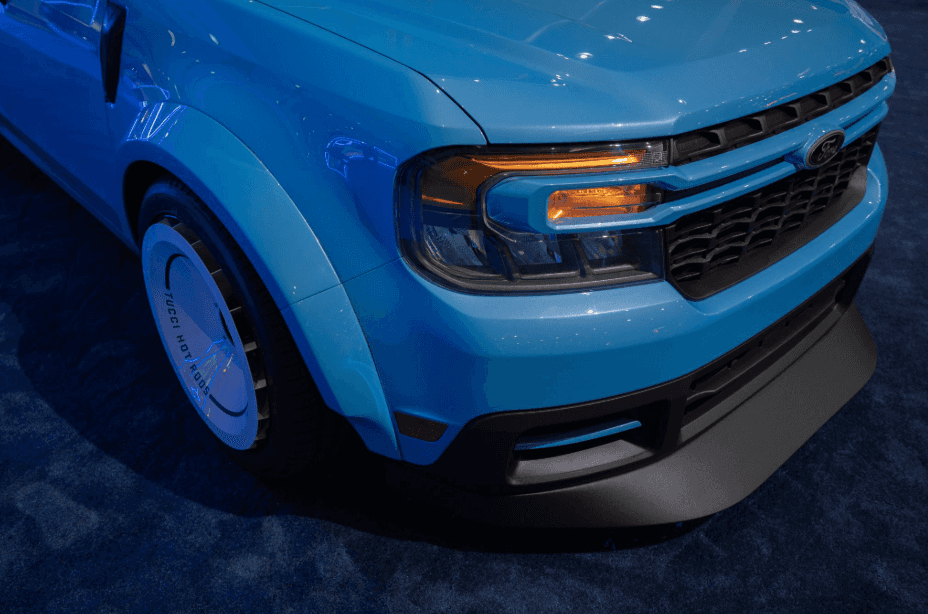
Ford Maverick Reliability
Ford Maverick Powertrains
The first decision you make determines the reliability profile of your truck. The Maverick offers two distinct personalities, and choosing the right one for your specific job is the key to longevity.
The 2.5L Hybrid Engine
The 2.5L hybrid engine is the standard powertrain, and it is a massive advantage for urban fleets. It combines a 2.5L Atkinson-cycle four-cylinder engine with an electric motor. The result is an EPA-estimated 42 mpg in the city. For a delivery fleet or a pest control company that spends hours idling and creeping through neighborhoods, this efficiency translates to thousands of dollars in fuel savings annually.
Reliability here comes from simplicity. The hybrid system uses an eCVT. Unlike a traditional automatic transmission with hundreds of moving gears and clutches, the eCVT uses a planetary gear set. There are fewer friction points. Fewer friction points mean fewer things to break. We see these units logging high mileage with minimal maintenance beyond standard fluid changes.
The 2.0L EcoBoost Engine
If your fleet travels highway miles or needs to tow, the 2.0L EcoBoost is likely the best choice for you. This turbocharged engine produces 250 horsepower and 277 lb-ft of torque. It is paired with an 8-speed automatic transmission that feels more traditional and responsive.
This engine has been battle-tested in millions of Ford vehicles, from the Edge to the Escape. Mechanics know how to service it, and parts are available at every auto parts store in Texas. Reliability for the EcoBoost comes from its robust cooling system and a block designed to handle turbo pressure for the long haul.
Real-World Towing Capabilities
Marketing brochures love to throw around big numbers. But you need to know what you can actually hook up to the trailer hitch receiver without voiding your warranty or overheating the transmission.
The Standard Setup
Out of the box, both the hybrid and the EcoBoost models offer a standard towing capacity of 2,000 pounds. This is sufficient for a small utility trailer loaded with landscaping tools or a pressure washer setup. For many light-duty fleets, this is all the capacity you will ever need.
The 4K Tow Package Advantage
If you need to move serious weight, you must opt for the 4K Tow Package. This is available on the EcoBoost model with all-wheel drive (AWD). It doubles the maximum towing capacity to 4,000 pounds. This package is not just a different hitch. It includes critical mechanical upgrades that directly impact reliability:
- Transmission Oil Cooler: This keeps your transmission fluid temperatures in the safe zone during long pulls up steep grades.
- Upgraded Radiator: A larger radiator and cooling fan ensure the engine sheds heat efficiently, preventing the kind of thermal stress that kills engines early.
- Trailer Brake Controller: This integrated system allows you to adjust the braking force of your trailer directly from the dash, saving wear on your truck’s service brakes.
- Final Drive Ratio: The gearing is adjusted to provide more torque at the wheels, reducing strain on the engine during acceleration.
With this package, a Maverick can confidently tow a small camper, a pair of jet skis, or a tandem-axle trailer loaded with materials.
Payload: It’s Not Just About Towing
For many fleets, what goes in the truck is more important than what goes behind it. The Maverick offers a standard payload capacity of 1,500 pounds. To put that in perspective, that is roughly equal to 37 bags of 40-pound concrete mix.
The FLEXBED System
Ford designed the bed of the Maverick to be used, not just looked at. The FLEXBED system allows your crews to create segmented storage using standard 2×4 and 2×6 lumber. You don’t need expensive aftermarket racking systems. You can create a double floor to separate tools from materials.
The bed also features standard 12-volt electrical leads behind access covers near the tailgate. This allows your team to wire in LED bed lights or small air compressors without hacking into the main wiring harness. This thoughtful engineering reduces the risk of electrical gremlins down the road caused by improper aftermarket installs.
All-Weather Reliability
San Antonio’s weather is unpredictable. One minute it is sunny, and the next you are driving through a torrential downpour. Reliability means staying planted on the road when conditions get slick.
The available AWD system on the EcoBoost models is a smart investment for fleet safety. It is an intelligent system that monitors wheel slip and sends power to the rear wheels instantly when traction is lost. This is not a heavy, clunky 4WD system as you find on a full-size truck. It is seamless. It adds a layer of safety for your drivers without a massive fuel economy penalty.
For fleets that venture off-pavement, perhaps to construction sites or rural properties, the FX4 Off-Road Package or the Tremor trim adds skid plates and all-terrain tires. These protective measures shield the undercarriage from damage, preventing costly repairs to the oil pan or fuel tank.
Maintenance and the Bottom Line
The true test of a fleet vehicle is the cost per mile. The Maverick shines here because it shares its architecture with high-volume Ford SUVs.
Tire and Brake Costs
Because the Maverick is lighter than a pickup truck like the F-150, it is easier on tires and brakes. You will likely see longer intervals between brake pad replacements. The tires are standard sizes found on millions of crossovers, meaning replacement costs are significantly lower than the heavy-load tires required for larger trucks.
The Northside Advantage
At Northside Fleet Center, we understand that your trucks are tools. Our service department is set up to get your vehicles in and out. We stock the filters, fluids, and wear items specifically for the Maverick because we know how popular they are becoming with local businesses.
Reliability vs. The Competition
You might be cross-shopping the Maverick against the Toyota Tacoma or even smaller vans.
- Maverick Vs. Tacoma: The Tacoma is legendary for reliability, but it is a larger, body-on-frame truck. It rides rougher, gets significantly worse fuel efficiency, and costs more upfront. Unless you need to tow 6,000 pounds, the Tacoma is likely overkill that hurts your operating budget.
- Maverick Vs. Compact Vans: Small vans offer enclosed storage, but they lack the versatility of an open bed. The Maverick’s Flexbed allows you to carry tall items like water heaters or trees that simply won’t fit in a small van. Plus, the Maverick’s cabin is far more comfortable for your drivers, which aids in employee retention.
Test Drive The Maverick and See If It’s Right For Your Fleet At Northside Fleet Center
We invite you to visit Northside Fleet Center in San Antonio. Come take a test drive. Load up the bed, see how the tailgate adjusts, and talk to our commercial sales team about the specs and the warranty coverage. Reliability is about trust, and we want to show you why the Maverick earns it.
0 comment(s) so far on Ford Maverick Reliability: Is the Ford Maverick Right for Your Fleet?